
Hugelkultur garden beds turn garden debris into very successful planting beds. The term “hugelkultur” joins two German words: “hugel”, meaning “hill” and “kultur” meaning, well, “culture”, so English translation: “hill culture”, was coined by German horticulturalists Hans Beba and Herman Andra in the 1970s. The most common version consists of creating raised garden beds by covering large to medium-sized pieces of wood with lasagna-like layers of dried leaves, green material (like green leaves,, grass clippings, etc.) and soil, and then planting into them. Mulching is an important final step to keep weeds at bay.
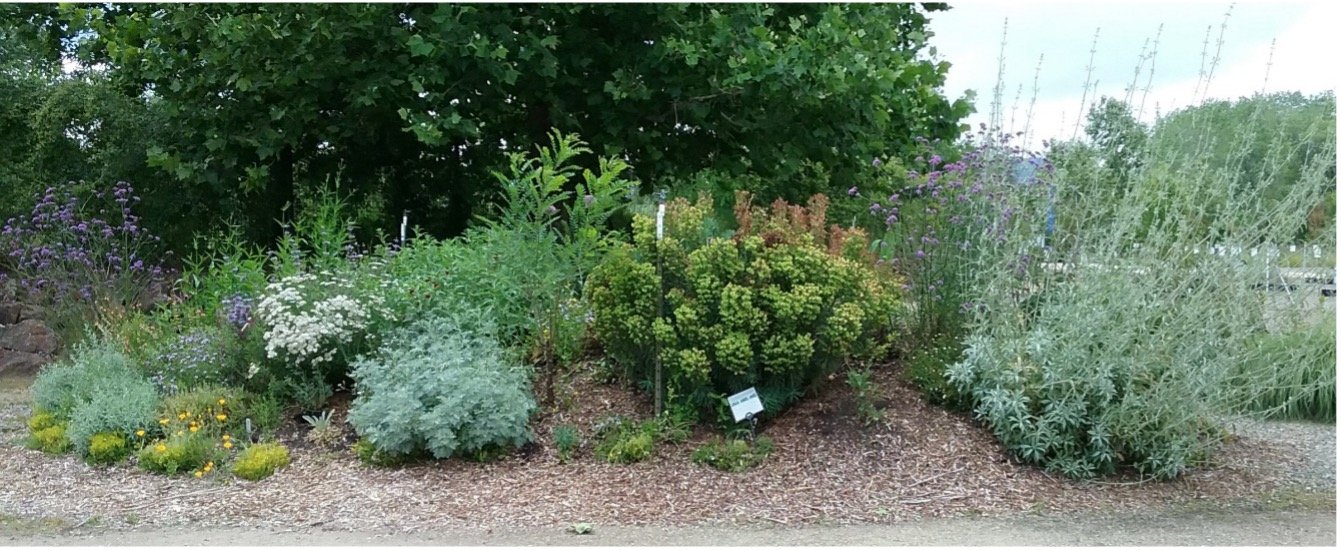
1st Nursery hugelkultur bed, year 3.
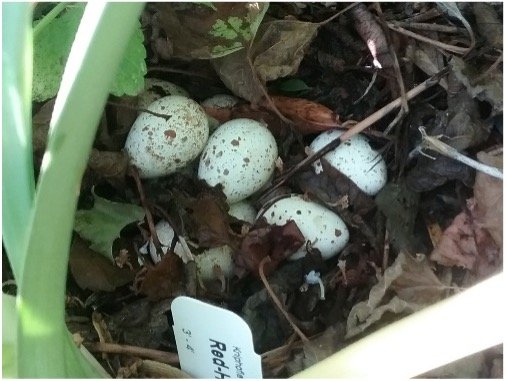
Habitat plantings as well! Quail nest found at base of plant in hugelkultur.
After the first establishing year of your hugelkultur bed, little additional water is needed. The rotting of the logs releases moisture, also mildly heating up the bed, letting plants get start earlier growth in the spring. The hugelkultur bed grows a huge variety of plants with varying water needs in one spot, because of the combination of perfect drainage and an ideal level of moisture retention in the soil. Also, no fertilizer is needed. It is important to keep adding soil or compost, at least annually, to the top of your hugelkultur bed as it begins to decompose, so roots are not exposed. And again, apply mulch, and more mulch as needed, to keep weeds down.
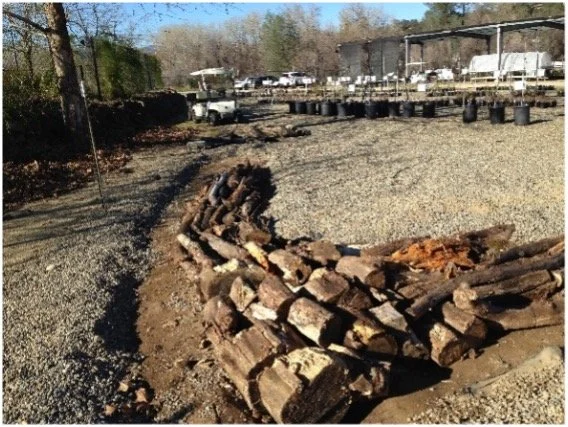
Base of hugelkultur was carved of of the nursery gravel and 1st layer of logs and branches started.
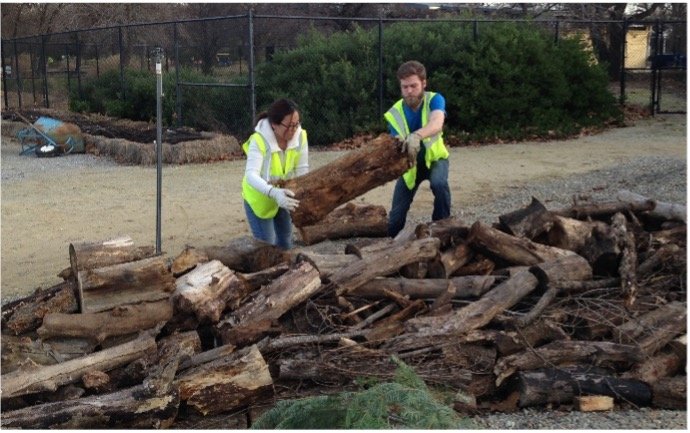
Base of logs and branches being built up.
Beginning with logs, branches, etc.
You will find many ways (or “recipes”) to make a hugelkultur bed, your own hugelkultur bed’s composition will depend on the resources you have available:
In the Nursery’s Hugelkultur beds:
· Bottom layer: logs and branches
· Next layer: a thick pile of dead leaves.
· Middle layer: lawn clippings, green leaves
· Next (and ultimately last) layer: soil from old (dead) plants’ pots – reusing old nursery soil (you can also use cured compost for these layers)
Some people dig trenches to keep their hugelkultur bed at the same level of surrounding soil, but raised hugelkultur beds have more soil surface, so, more plants can be planted!
Come see the Nursery’s beautiful hugelkultur display planting beds for yourself. The Nursery is open weekly, year-round; with new hours for 2026: Weds. -Sat. 9am-3pm.